
Buyer's guide · data as of Oct 20, 2026
Porsche 911 GT2 and GT2 RS buyer's guide: 996, 997 and 991
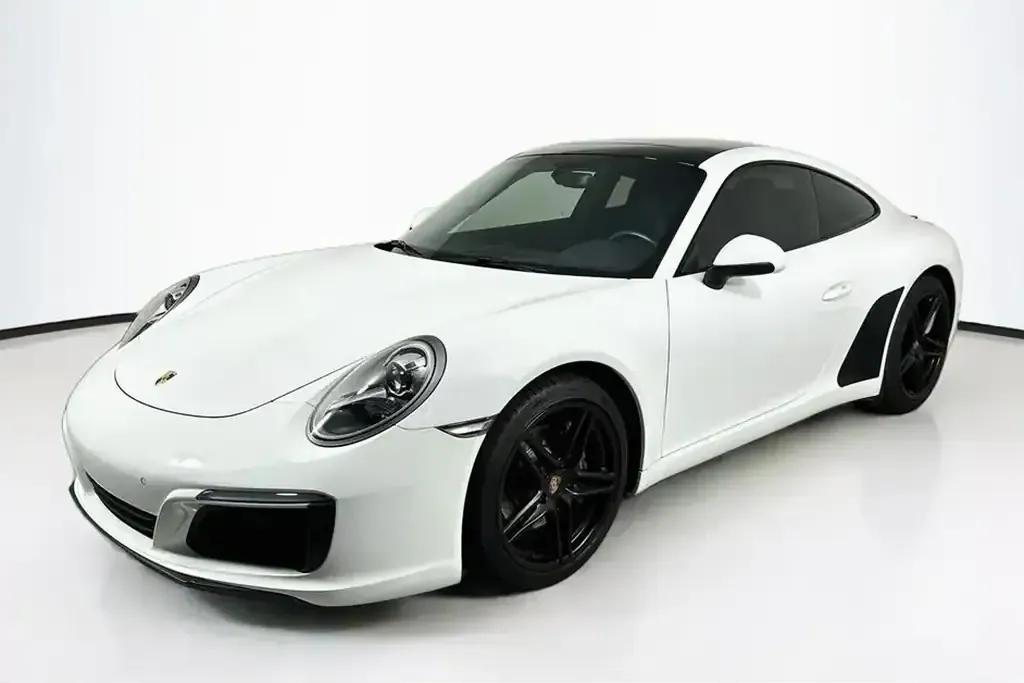
The GT2 is the rear-drive, turbocharged top of the 911 range. The 996 GT2 and 997 GT2 use twin-turbo Mezger engines with manual gearboxes; the 997 GT2 RS is the limited, lighter, more powerful version; the 991 GT2 RS is a 700 hp, PDK-only car with an optional Weissach package. Production was small for each, so originality and history move value a lot.
The models at a glance
996.1/.2 GT2
- Model years
- 2002–2005
- Engine
- 3.6 L Mezger twin-turbo flat-six
- Horsepower
- 456 hp
- Base MSRP when new
- $180,665
- Built for the US (est.)
- 312
- Gearbox, cars we track
- Manual 18
Built for the US by model year, from VIN records: 176 (2002), 119 (2003), 17 (2004). The 2005 count isn't in yet. Canada got 11 more in 2002.
997.1 GT2
- Model years
- 2008–2009
- Engine
- 3.6 L Mezger twin-turbo (variable turbine geometry) flat-six
- Horsepower
- 523 hp
- Base MSRP when new
- $192,560
- Built for the US (est.)
- 194
Plus 19 for Canada.
997.2 GT2 RS
- Model years
- 2011
- Engine
- 3.6 L Mezger twin-turbo flat-six
- Horsepower
- 620 hp
- Base MSRP when new
- $245,000
- Built for the US (est.)
- 142
142 is the North America total (US and Canada). 500 built worldwide.
991.2 GT2 RS
- Model years
- 2018–2019
- Engine
- 3.8 L twin-turbo flat-six with intercooler water spray
- Horsepower
- 700 hp
- Base MSRP when new
- $293,200
- Built worldwide (est.)
- 1,000
- Gearbox, cars we track
- PDK 24
US count not published. PDK only. 1,000 was Porsche's planned run; a few more were built in 2019 to replace cars lost at sea.
What they sell for and what is listed
| Model | Cars tracked | Sales on record | Median sale, last 24 months | For sale now | Median asking |
|---|---|---|---|---|---|
| 996.1/.2 GT2 2002–2005 | 87 | 69 | $212,000 (9 sales) | 12 | $375,000 (9 priced) |
| 997.1 GT2 2008–2009 | 50 | 39 | $296,500 (9 sales) | 6 | $599,900 (5 priced) |
| 997.2 GT2 RS 2011 | 34 | 27 | too few sales to quote (2) | 3 | too few priced listings (1) |
| 991.2 GT2 RS 2018–2019 | 165 | 122 | $608,000 (49 sales) | 97 | $797,400 (84 priced) |
911 Tracker data as of Oct 20, 2026: VIN-checked sales and live US listings. A median is shown only with 5 or more sales or priced listings; the number of sales or listings behind each median is in brackets. What each car sold for, price history and what each option does to the price are on 911 Tracker with a free account.
Across the 43 cars in this guide whose gearbox we know: Manual 19 (44%), PDK 24 (56%), as of Oct 20, 2026.
Known problems to check
Model-specific issues documented by specialists. None of them means a car is bad; each one is a question to answer before you pay.
Coolant pipe fittings (glued/bonded) pulling out
The GT1-derived Mezger engine's coolant manifolds use aluminium pipes bonded into cast housings; after many heat cycles (especially track use) the adhesive can let go and a pipe can pull out, dumping coolant, sometimes onto the rear tyres. Applies to 996 Turbo/GT2/GT3 engines (the cited article's photo is of a 996 twin-turbo engine). Coolant typically escapes quickly as steam; the bigger hazard is coolant on the road or track. From the 911 Buyers shop: this is mainly a concern on cars tracked hard for long sessions; we don't see it fail often on cars driven on the road. Pinned pipes are still a plus when you buy or sell.
Fix: Pipes pinned (or re-bonded/welded) in the housings; normally an engine-out job, often combined with clutch/other work.
Source: automotivetechinfo.com
Carbon-ceramic (PCCB) rotor wear/cracking
PCCB discs (standard on this car) are condemned for chips, cracks or small amounts of wear; replacement is very expensive, and many cars have been converted to steel. Mostly a concern on tracked cars.
Fix: Inspect rotors (and pad thickness) before purchase; replace damaged rotors, or convert to iron rotors.
Source: fcpeuro.com
Clutch and flywheel wear
Clutch/flywheel life is shortened by track use; buyers' guides advise budgeting for replacement around 40,000-60,000 miles.
Fix: Clutch and flywheel replacement.
Source: renndriver.com
Intercooler water-spray system
The spray system cools the intercoolers under high load and high intake temperatures, and Porsche limits power when the tank runs empty. Specialists list declining spray effectiveness (power loss in sustained driving, higher intake temps, spray-system warnings) as a watch item.
Fix: Keep the tank filled with distilled water; inspect the spray system and log intake temperatures.
Source: repasimotorwerks.com
Wastegate / boost-control wear
Specialists cite wastegate wear causing inconsistent boost, boost spikes/drops and boost-related check-engine lights.
Fix: Diagnose and repair the wastegate actuation early.
Source: repasimotorwerks.com
PDK clutch wear (track use)
Hard launches and track use wear the PDK clutches; signs include slip under hard acceleration, delayed engagement and PIWIS clutch-wear warnings.
Fix: Check clutch wear values with PIWIS; service PDK fluid more often if tracked.
Source: repasimotorwerks.com
Carbon-ceramic (PCCB) rotor replacement cost
PCCB is standard; discs are replaced for chips/cracks or wear and are roughly 10x the cost of iron rotors. Mainly a concern on tracked cars.
Fix: Inspect discs and pads before purchase; replace or convert to iron rotors.
Source: alconkits.com
Checks for every car
Records and ownership
A continuous service history from a Porsche dealer or a known specialist, and a clean title. Gaps in the records are worth a price conversation, not just a question.
VIN, options and window sticker
Match the VIN to the car, the title and the build record. Options are claimed wrongly more often than you might think; decode the VIN before you pay for them.
Over-rev report (manual cars)
The engine computer on these cars counts over-rev events by range. A Porsche dealer or specialist can read them with a factory scan tool; higher ranges deserve an explanation.
Leaks, brakes, tires
Look under the car for oil and coolant. Measure pads and rotors (carbon-ceramic rotors are expensive), and check tire date codes, not just tread.
A specialist pre-purchase inspection
Have a Porsche specialist inspect the car before you commit, ideally with a leak-down or compression test on older engines. It is the cheapest insurance in the hobby.
Factory options that show up most
From window stickers and VIN records of 113 decoded cars, as of Oct 20, 2026. Rare options and paint can move a price more than miles do; what each option does to the sale price is on 911 Tracker for members. Check any car's options with the VIN decoder.
| Option | Cars with it |
|---|---|
| Porsche Crest on Headrests (XSC) | 60 of 113 (53%) |
| Floor Mats in Interior Color (810) | 43 of 113 (38%) |
| Leather/Alcantara® Interior Package in Black with Platinum Grey Stitching (78) | 39 of 113 (35%) |
| Sport Chrono Package Plus (640) | 34 of 113 (30%) |
| Black (A1) | 30 of 113 (27%) |
| Automatically Dimming Mirrors with Integrated Rain Sensor (P12) | 30 of 113 (27%) |
| Rear Center Console Carbon (XMJ) | 28 of 113 (25%) |
| Footrest in Sports Look (XXZ) | 27 of 113 (24%) |
Go deeper
Each model has its own market report with the full numbers we can publish: 996.1/.2 GT2, 997.1 GT2, 997.2 GT2 RS, 991.2 GT2 RS. Every car we track is on 911 Tracker by VIN.
Own one already? See what yours is worth on the 911 value page or get a firm offer on your 996.1/.2 GT2 or 997.1 GT2. Dealers and brokers: see dealer access to off-market cars and auctions.
Data: 911 Tracker, VIN-checked sales and live listings in the US, built by 911 Buyers. Counts cover the cars 911 Tracker records, not every sale in the country. Problem descriptions come from the sources linked next to each one. This guide is general information, not an appraisal or an inspection.